Note: This is an ongoing project that will be updated as significant progress is made in the future
Project Overview
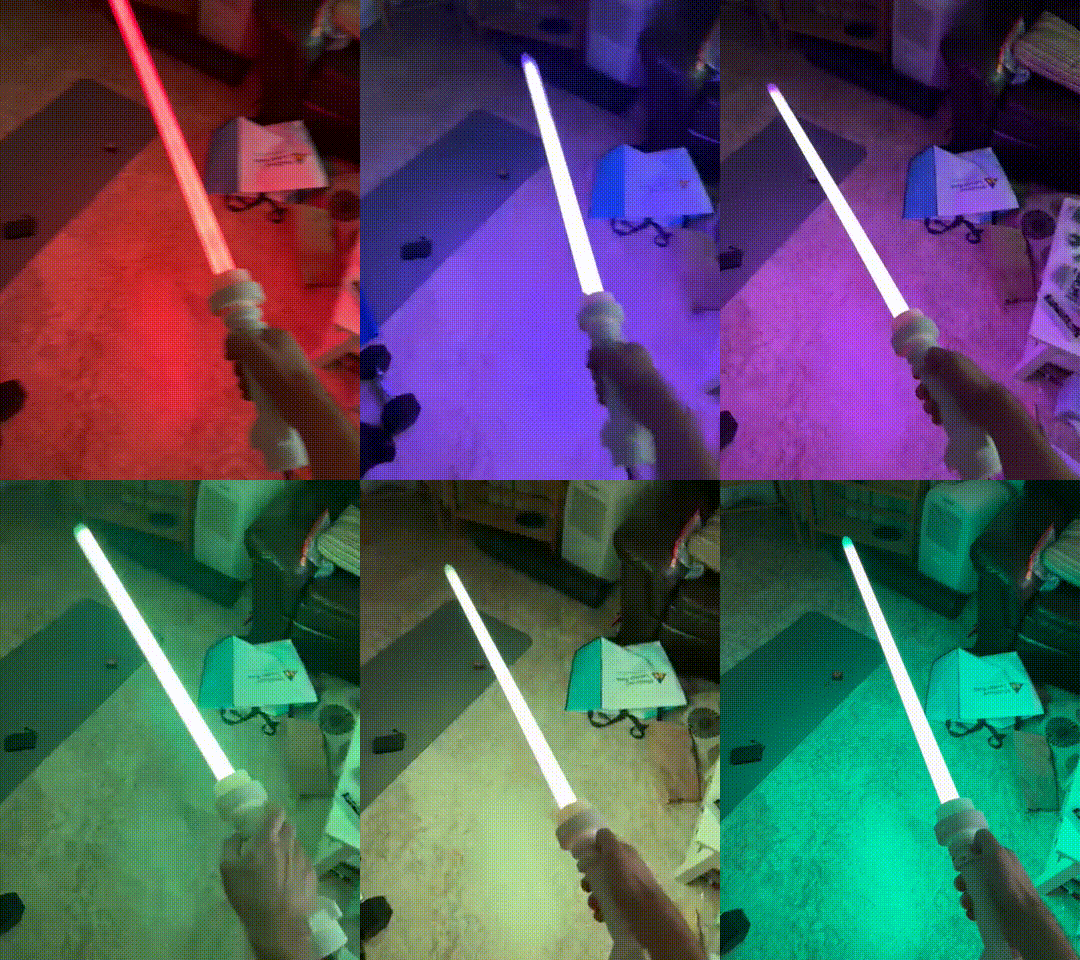
After having constant videos go through my social media feed, I wanted to try to take on building a prototype lightsaber that can not only take heavy damage but can also change colors based on user input and the motion of the lightsaber.

Development of First Iteration
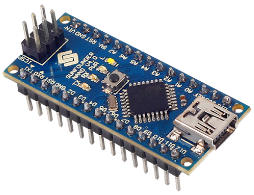
For the first iteration, I ran a 3D-printed hilt to house all the electronics. I used an Arduino Nano to execute code, an MPU6050 Gyro + Accelerometer to input movement, and a lithium-ion battery to deliver a high current. All of the electronics are mounted and wired via a PCB.




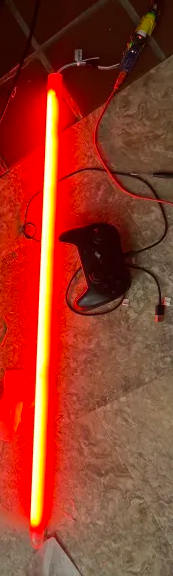
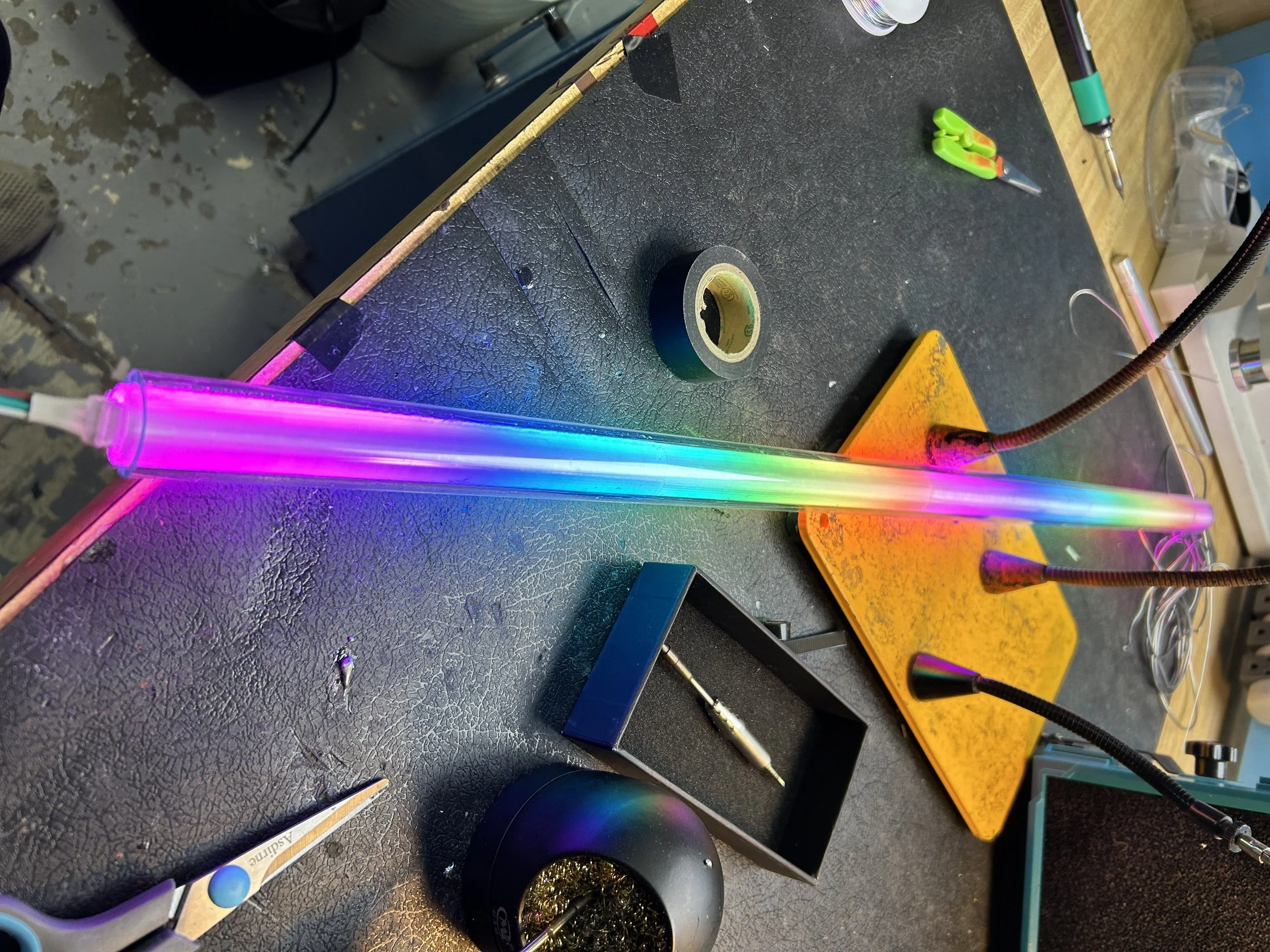
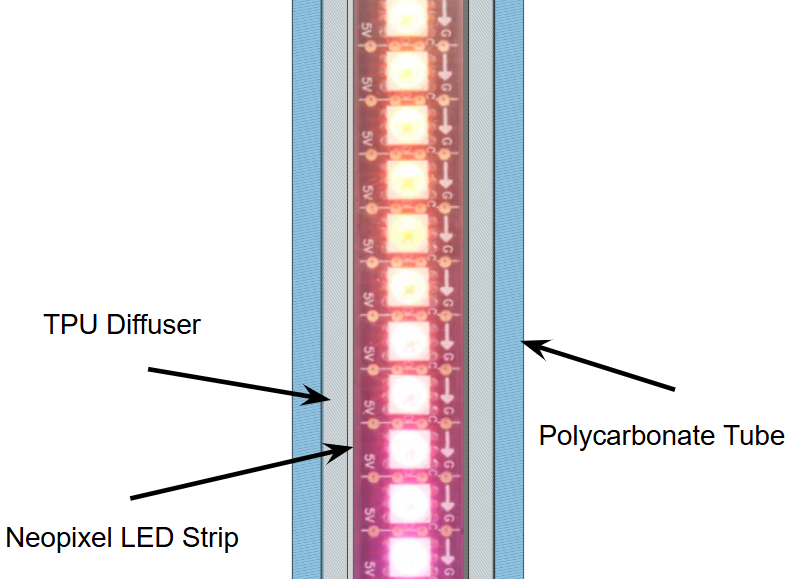
A Neopixel LED strip travels through the polycarbonate blade and has a 3d printed mount that is transparent which acts as both a diffuser and an attachment method for the LED Strip.
The main challenge with this project is designing a small enough electronics hub so the hilt does not become too thick. Circles are inherently bad for optimizing space, and having a rectangular circuit board fit in that circle means that you have to optimize space efficiency as much as possible. This engineering challenge was a big reason this project was so much fun for me, as I got to design the electronics assembly in the image to the right.

Final Results of First Iteration
V2 Design Improvements
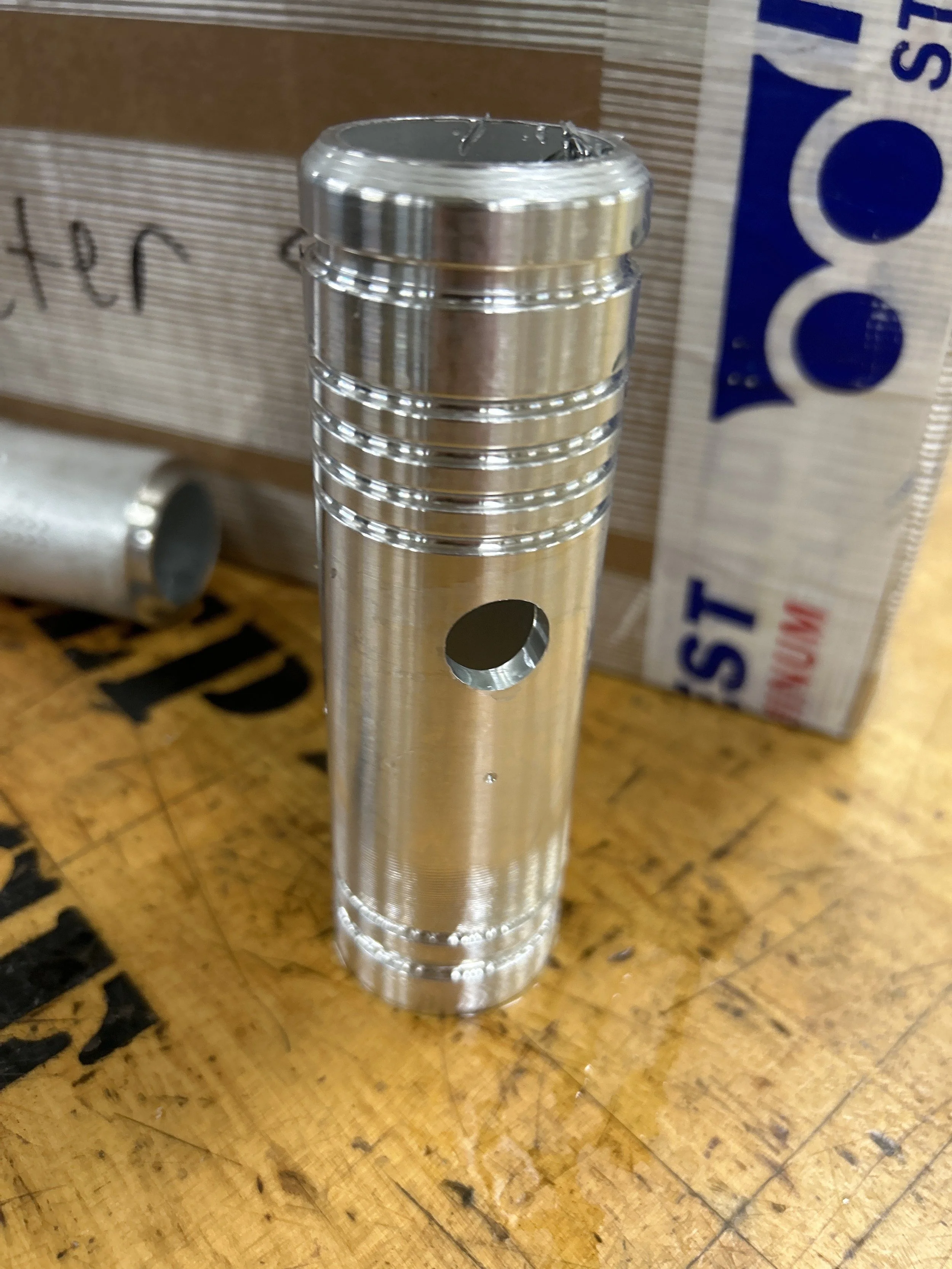
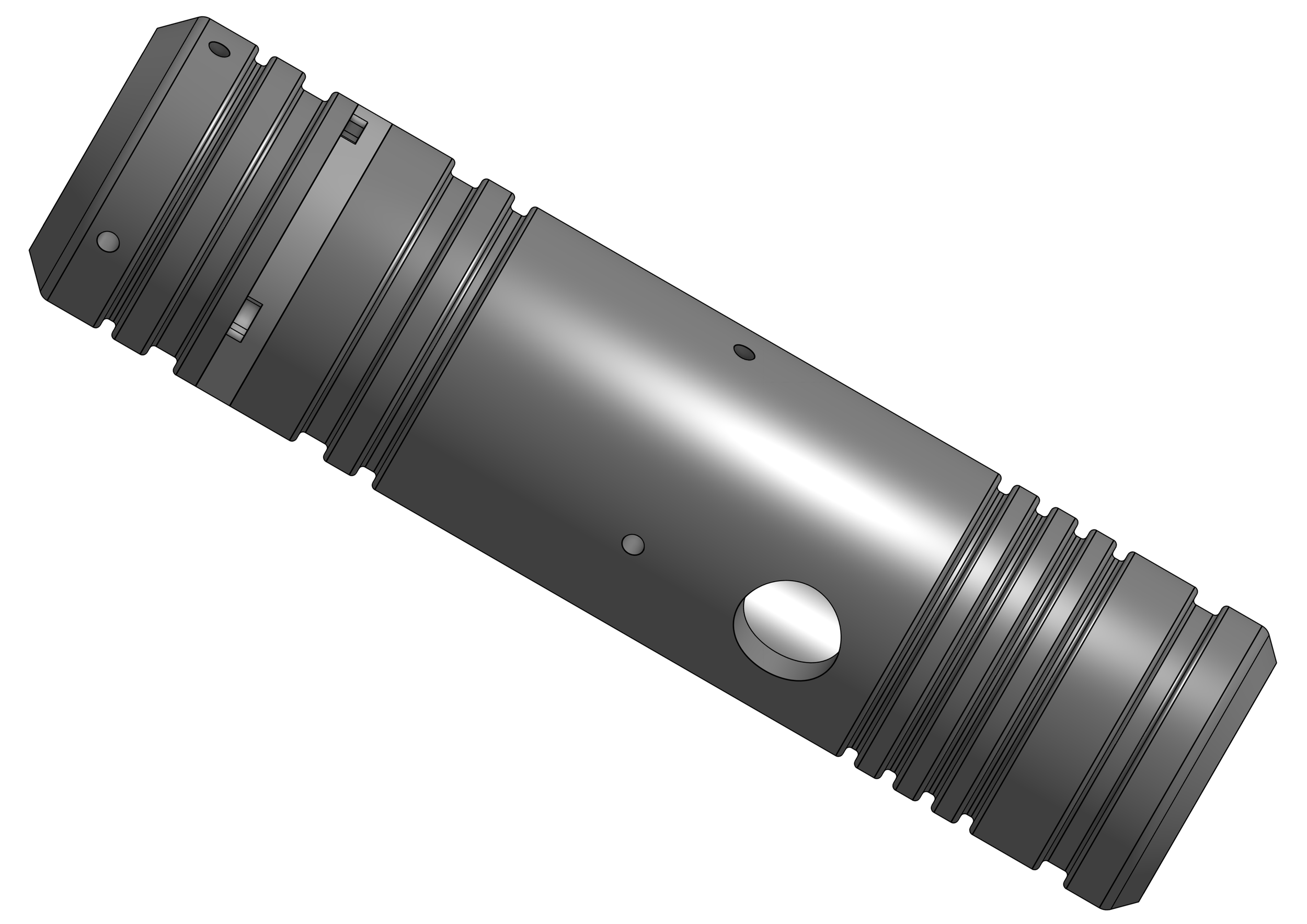
For the second version of the lightsaber, I designed a 3 part, CNC machinable hilt that was fabricated using resources available at Worcester Polytechnic Institute. A benefit of this change was the rigidity of the machined hilt.
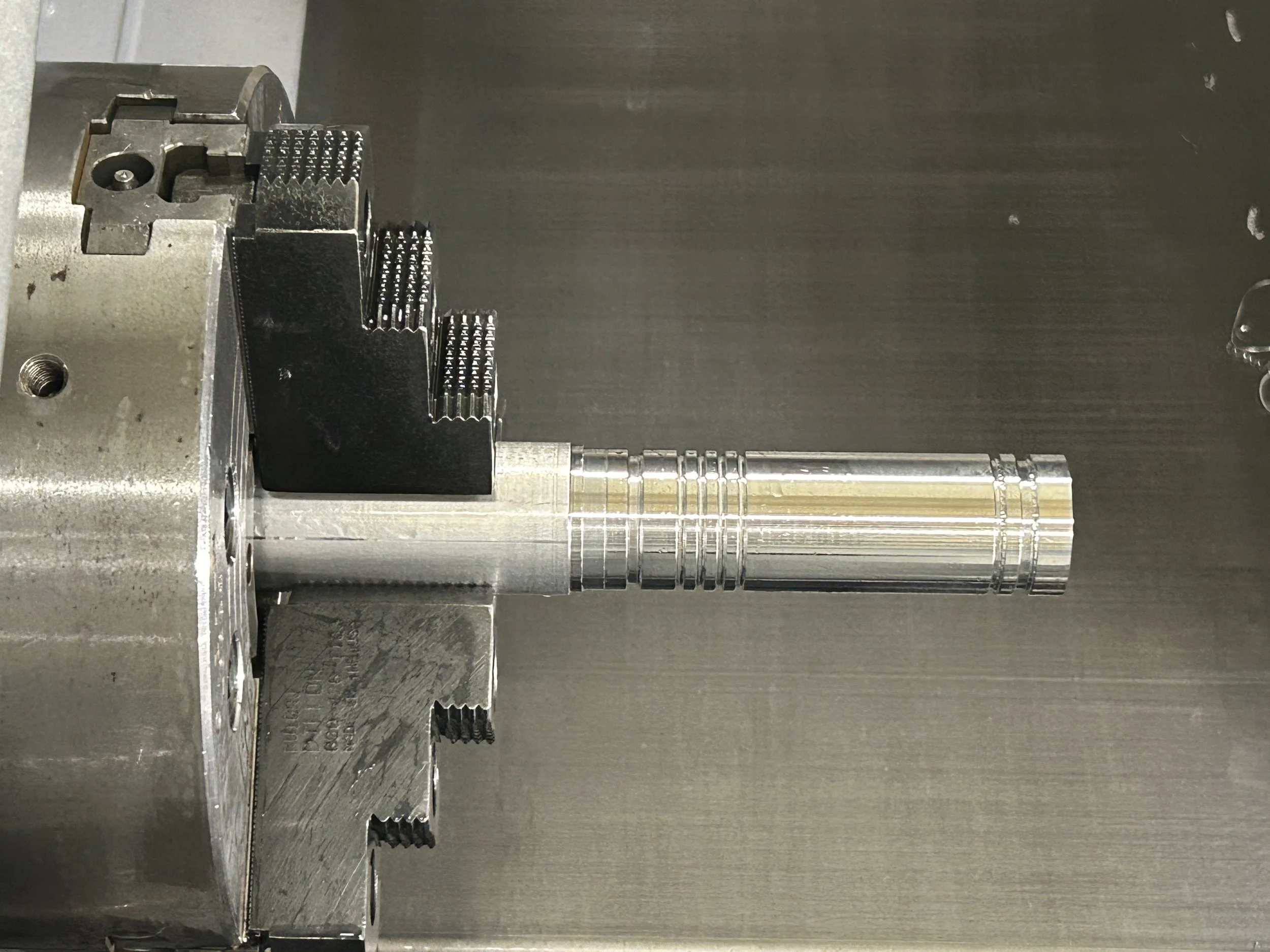
To better protect the neopixel LED lighting that creates a stronger diffusion effect, I designed a thermoplastic polyurethane (TPU) piece that both aligns and diffuses the neopixel strip. What makes this piece so special is due to its rubber-like properties. These properties act as a shock absorber when the polycarbonate tube sustains high impact. This in theory makes the led strip less likely to break
PCB V2
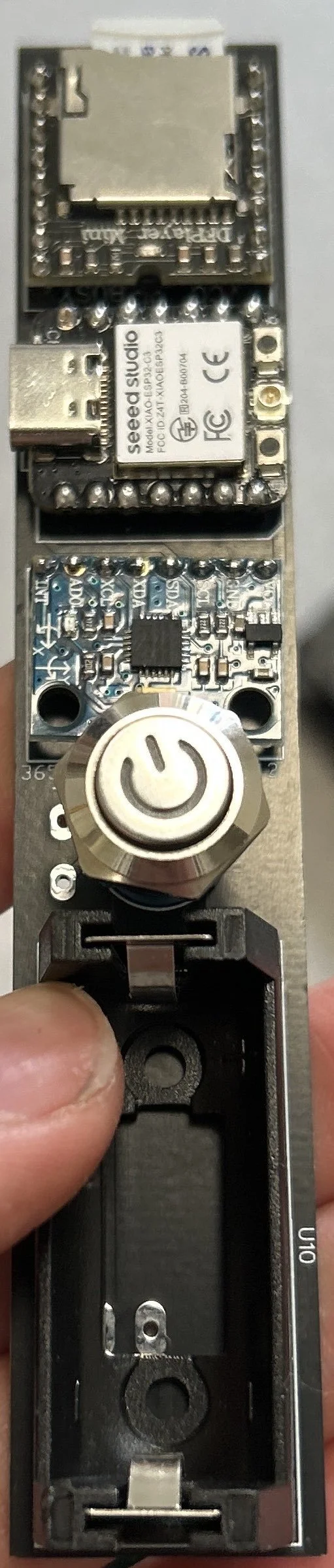
In the second version of the PCB, multiple additions were created to improve both the performance and feel of the lightsaber. The switch from an arduino nano to a Xiao esp32 c3 helped optimized both processing power and the size in the pcb. Additionally, a Dfplayer Mini MP3 player was added to allow for lightsaber sounds. This combination of features resulted in a pcb size change of 105 × 27 mm to 125 × 23 mm. This size change allowed for a reduction in the diameter of each lightsaber hilt